
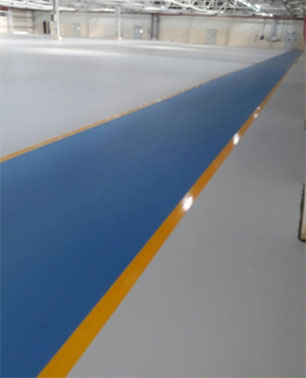
PU Flooring (Polyurethane Flooring) is a high-performance flooring system made from
polyurethane resin that creates a seamless, flexible, and highly durable surface. It is
widely used in industries where floors must withstand heavy traffic, temperature
fluctuations, chemical exposure, and strict hygiene standards.
PU flooring is
commonly installed in food processing units, pharmaceutical industries, commercial
kitchens, cold storage facilities, warehouses, and manufacturing plants due to its
strong performance and long-lasting durability.
Why PU Flooring is Used
PU flooring is used where high durability, hygiene, and temperature resistance are essential. Traditional concrete floors often crack, absorb chemicals, and deteriorate under heavy usage, while polyurethane flooring provides a protective and long-lasting coating.
It is commonly used for:- Food processing plants
- Pharmaceutical industries
- Cold storage facilities
- Commercial kitchens
- Chemical processing units
- Warehouses and industrial facilities
PU flooring offers excellent resistance to chemicals, thermal shock, and heavy mechanical loads, making it ideal for demanding environments.
How PU Flooring Works
-
Surface Preparation
The concrete surface is cleaned and mechanically prepared through grinding or shot blasting to remove dust, oil, and loose particles.
-
Repairing Surface Defects
Cracks, holes, or damaged areas are repaired to ensure a strong and stable base.
-
Primer Application
A primer coat is applied to improve adhesion between the concrete substrate and the polyurethane coating.
-
PU Flooring Application
The polyurethane resin mixture is applied evenly across the floor to form a seamless and uniform surface layer.
-
Curing & Finishing
After application, the floor is allowed to cure, forming a strong, smooth, and durable flooring system ready for use.
Benefits of PU Flooring
-
Excellent Chemical Resistance
PU flooring can withstand acids, oils, and harsh chemicals used in industrial environments.
-
Thermal Shock Resistance
It performs well in areas exposed to extreme temperature changes, such as cold storage and food processing units.
-
Seamless & Hygienic Surface
The joint-free surface prevents bacterial growth and makes cleaning easier.
-
High Flexibility
Polyurethane flooring is more flexible than epoxy, which helps reduce cracking caused by structural movement.
-
Long Lasting Performance
Designed to withstand heavy machinery, foot traffic, and harsh industrial conditions.
-
Slip Resistant Options
Anti-slip finishes can be added to improve safety in wet or slippery environments.
Frequently Asked Questions (FAQs)
PU flooring is more flexible and resistant to temperature changes, while epoxy flooring is generally harder but less flexible.
PU flooring is widely used in food industries, pharmaceutical plants, cold storage facilities, commercial kitchens, and manufacturing units.
With proper installation and maintenance, PU flooring can last 10–15 years or longer depending on usage conditions.
Yes, PU flooring can be designed with anti-slip properties, making it ideal for wet and hygienic environments.